How to set up a homework corner in a small Australian home
A practical way to make a homework spot in a small Australian house or unit, including summer heat, glare and the problem of the dining table doing every job.
In a small house or unit, homework often lands on the dining table because there is nowhere else. That works until dinner needs the same surface, or until a second child needs to sit down, or until the afternoon sun turns the table into a glare trap. You do not need a dedicated study to make this easier. You need one clearly defined corner that can be set up in a few minutes and packed away again.
This is a setup guide for ordinary Australian homes: tight living rooms, rooms that have to share jobs, and summers that make a west-facing table hard to use after three o'clock.
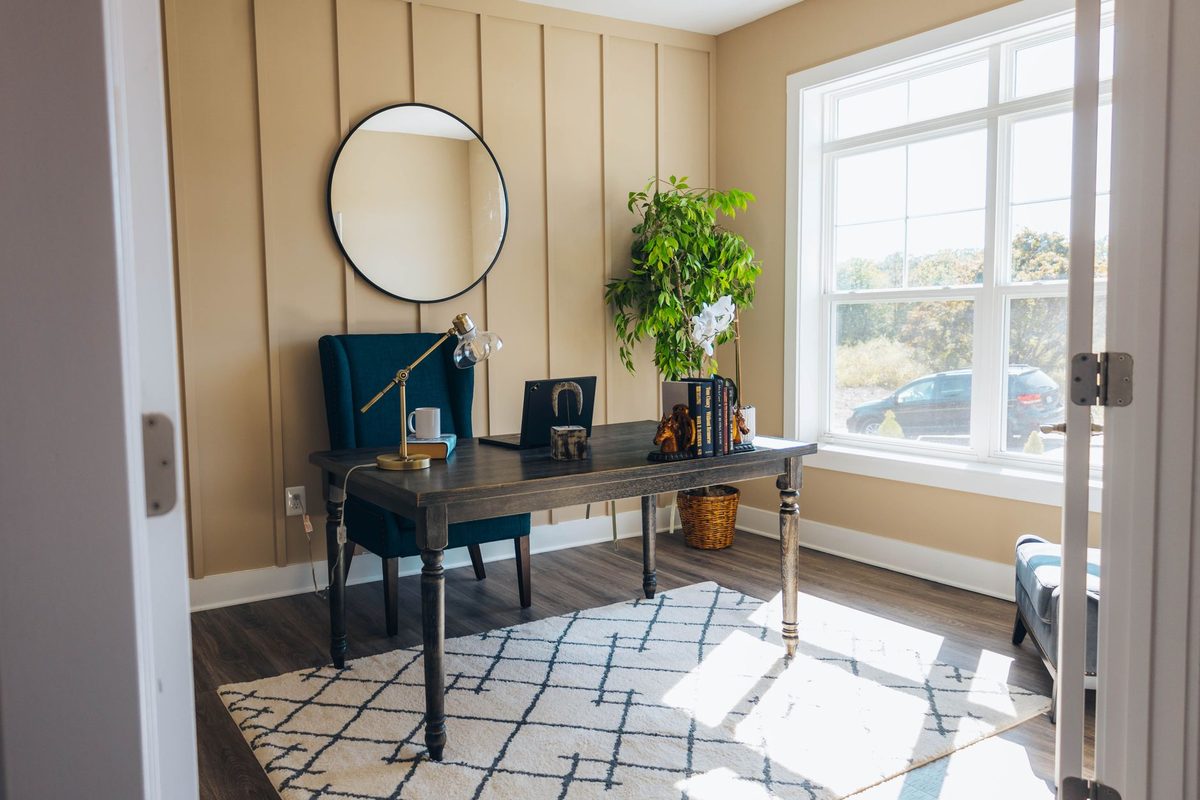
Pick the spot by light and noise, not by furniture catalogues
Walk through the home at the time homework actually happens, usually between about 3:30 and 6:00 pm in term time. Notice three things:
- Glare. A bare window facing west or north-west in Brisbane can make a screen or a worksheet almost unusable. A side-on seat, a light curtain, or a slightly different angle often matters more than a new desk.
- Heat. If the only table sits under a skylight or against glass, it will be the hottest place in the room. Shade the glass, move a metre away, or choose a spot near a ceiling fan rather than in the direct blast of an air conditioner, which can also be noisy and drying.
- Traffic. A hallway table looks clever until everyone walks past it with school bags. A corner of the living room, the end of a kitchen bench (if it is safe and not used for food prep at the same time), or a bedroom wall can be better than a "pretty" spot in the thoroughfare.
A good homework corner is slightly boring. It is quiet enough to think, cool enough to stay, and close enough to an adult that help is possible without shouting down a hallway.
Use a surface that can disappear
If you have room for a narrow desk, a depth of about 40 to 50 centimetres is enough for a book, a pencil case and a laptop. If you do not, consider:
- A wall-mounted fold-down desk or a sturdy shelf with a fold-down flap, fixed properly into studs or with the right wall anchors
- A small table that lives against a wall and comes out by one chair's width
- A clear end of the dining table, with a rule that homework tools live in a caddy and leave when dinner starts
The dining table can still be the homework place. The change is to stop it being a permanent mixed pile. A caddy — a shallow box with pens, scissors, a sharpener, earphones, a charger and a sticky-note pad — turns setup into a two-minute job. When dinner starts, the caddy goes to a shelf. The table becomes a table again.
If two people need to work at once, it is often better to split locations than to squeeze two large setups onto one table. One person at the table, one in a quieter corner with a lap desk or a small folding table, is a perfectly respectable small-home solution.
Lighting that does not fight the afternoon
Overhead downlights can throw shadows on a page. A cheap adjustable desk lamp, placed on the opposite side to the writing hand, usually helps. In the late afternoon, combine that with a curtain or a cheap blinds adjustment rather than adding more harsh light.
If someone is using a screen, raise it so the neck is not bent over a laptop for an hour. A cookbook stand, a box, or an inexpensive riser is enough. This is ordinary ergonomics, not a specialist setup.
Keep supplies visible and limited
Homework stalls when the scissors have migrated to a craft drawer and the only pencil is in a bedroom. The caddy should be obvious and slightly over-prepared for ordinary tasks: pencils, a pen, a ruler, glue, spare paper, a charger, and whatever the current school year actually uses. Do not store the entire craft cupboard there. Overflow creates the mess that made the table unusable in the first place.
A wall hook or a single shelf above the corner can hold the caddy, a water bottle and a set of headphones. Vertical storage is often the only spare space in a small room.

Build a start-and-finish ritual
The corner works when it has a beginning and an end. A simple version:
- Bag down in its place, not on the homework surface.
- Caddy out, water on the table, device chargers where they will not trail across the page.
- A short list of what needs to be done, written on paper even if the school uses an app. Paper survives a low battery.
- When the work is finished, papers back in the bag, caddy away, surface wiped.
The last step matters as much as the first. A corner that is never reset becomes another cluttered shelf, and then people go back to working on the sofa.
Time-wise, many families do better with a short first session soon after arrival — something like twenty to thirty minutes — and a later check if needed, rather than an open-ended block that collides with dinner. Children vary, and schools vary. The principle is to stop homework colonising the whole evening.
Summer-specific problems
In a hot climate, a homework corner can fail for reasons that have nothing to do with motivation:
- The chair sits in a patch of sun that did not exist in winter
- The laptop becomes hot on a poorly ventilated table
- Everyone is tired and thirsty, and the "quick job" turns into irritability
Move the chair with the season if you need to. Offer water as part of the setup, not as an afterthought. If the house is hotter than is reasonable in the late afternoon, it may be better to do the shortest tasks first and leave reading or heavier work until the house has cooled a little after dinner. That is a climate adjustment, not a lowered standard.
What you can skip
You do not need themed stationery, a pinboard in matching colours, or a room makeover. You need a surface, a chair that supports a straight back, light you can control, a caddy, and a habit of packing up. If a $10 lamp and a plastic box solve most of the daily friction, that is a successful homework corner.
If evenings in your house are already a stagger of arrivals and meals, it is worth reading this together with the weeknight dinner post on this blog. The same idea runs through both: give each job a place and a finishing time, so the table can be a table again before the day is over.